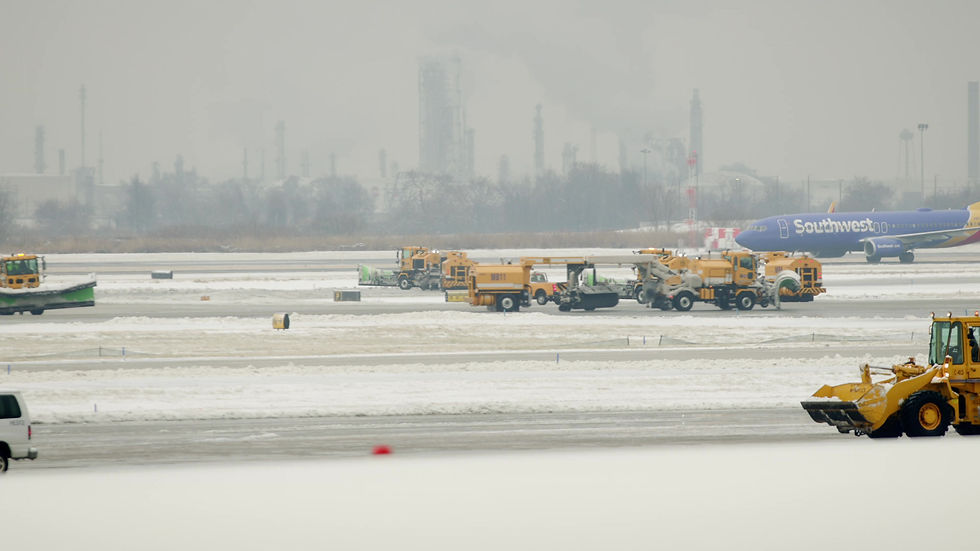
Gate Assignment Tool
*Confidential Project – Summary Only
+
Overview
GateAI is a gate assignment optimization platform co-developed by Optym and Southwest Airlines. It automates and assists in real-time gate allocation by combining AI-driven recommendations with human-in-the-loop controls.
The goal: reduce planner workload, prevent gate conflicts, and improve throughput at some of the busiest airports in the world.
My Role & Collaboration
I was the UI/UX Designer on the team, responsible for end-to-end design:
-
Research (interviews, process mapping, comparative analysis).
-
Information architecture and workflows.
-
Wireframes, interactive prototypes, and micro-interactions.
-
Usability testing and iteration.
I collaborated closely with:
-
Gate planners & controllers (end users).
-
Product leads (business priorities).
-
Engineers & algorithm scientists (translating constraints into usable, explainable UI).
Research
Methods:
-
Stakeholder Interviews → gate planners, NOC controllers, GroundOps.
-
Process Mapping & Observations → documented workflows for normal vs. disruption-heavy operations.
-
Comparative Analysis → benchmarked existing ops tools and control center dashboards.
-
Design Sprints → facilitated workshops around conflict resolution, prediction visibility, and override mechanisms.
Findings:
-
Planners don’t trust black-box automation, AI rationale must be visible.
-
Stress peaks during irregular ops (delays, diversions, congestion).
-
Users wanted color-coded alerts, “what-if” tools, and historical usage patterns.
-
Override flexibility with minimal clicks was critical.
Synthesis & Insightslaboration
We synthesized research into planner workflows and needs:
Personas:
-
Station-level Gate Planner → focuses on immediate conflicts, crew/passenger connections.
-
NOC Supervisor → monitors the network view, balances system-wide priorities.
Workflow Pain Points:
-
Fragmented data sources → slowed decision-making.
-
Reactive firefighting instead of predictive planning.
-
Lack of collaborative visibility → redundant phone calls.
Ideation & Design Process
We moved from problem framing → idea generation → testing:
-
Early Sketches → paper flows of Gantt charts, conflict resolution, and AI explanation widgets.
-
Wireframes → timeline-based scheduling, gate assignment drag-and-drop, alert panels.
-
Interactive Prototypes → tested with planners to simulate both calm and disruption-heavy scenarios.
Prototyping & Testing
-
Tested interactive prototypes with Southwest planners.
-
Iterated on color coding for alerts until critical vs. low-priority conflicts were instantly distinguishable.
-
Refined sandbox mode after users asked for a safe testing space without impacting live ops.
-
Added explanation tooltips after feedback that “we need to know why the AI chose this gate.”
Final Solution
Core Design Features:
-
Gate Plan Visualization: Dual Gantt + Grid views; aircraft “pucks” with real-time progress bars and hover details.
-
Conflict Resolution: Drag-and-drop reassignment, side-by-side comparison of old vs. new assignments, batch conflict resolution.
-
AI Explainability UI: Visual system showing rationale (crew legality, adjacency restrictions, passenger connections).
-
Alerts & Exception Handling: Predictive focus zones with color-coded priorities; transparency in automatic optimizer actions.
-
Sandbox Mode: Safe planning environment to test changes without publishing, with confirmation layers.
-
Collaboration Dashboards: GroundOps and Network views, reducing phone-based coordination.
Algorithm Collaboration:
-
Worked with engineers on the VLSN optimization algorithm (which evaluates thousands of possibilities in seconds).
-
Translated constraints and objectives (crew legality, towing distance, adjacency penalties) into readable UI explanations.
-
Ensured outputs were displayed in 1–2 mins, interpretable under time pressure.
Impact
-
Improved trust & usability → planners adopted AI suggestions more readily once rationale was transparent.
-
Reduced stress during disruptions by shifting from reactive to predictive decision-making.
-
Laid groundwork for commercialization → design assets are now guiding adoption by other global airline partners.
-
Proved the value of UX in high-stakes, algorithm-heavy systems.
Key Takeaways
-
Tested interactive prototypes with Southwest planners.
-
Iterated on color coding for alerts until critical vs. low-priority conflicts were instantly distinguishable.
-
Refined sandbox mode after users asked for a safe testing space without impacting live ops.
-
Added explanation tooltips after feedback that “we need to know why the AI chose this gate.”
Get to know better
GateAI is a confidential collaboration with Southwest Airlines. What you see here is a high-level overview.
I’d love to walk you through the full case study, including design artifacts and prototypes, in a one-on-one conversation.
You can call or e-mail me directly, or simply fill out the form below to get in touch and know more.